I have written and researched articles for twelve years. My name is Javed. I work as an expert article writer and researcher. I have practical experience using AI tools for writing and research. You can trust this guide because it comes from long observation and real testing.

People keep asking which AI tools matter most in 2026. Many lists promise big changes. I tested a wide range of tools over the years. Some saved real time. Others looked impressive but added little value. Here are five tools that consistently showed up as useful for people who actually work with content research and online projects. I will share what I saw and what stayed practical.
Top Ai Tools List
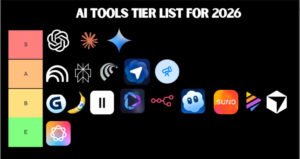
ChatGPT Remains the Daily Workhorse
Most people still start here. The free and paid versions both get used heavily. I rely on it for first drafts research summaries and idea lists. The quality improved over time. The biggest change is better memory of context in longer chats.
I remember early versions that produced stiff text. Now the output feels closer to usable. Still I never publish the first version. I rewrite the tone and check every fact. People who treat it as a finished product usually get caught. People who treat it as a fast assistant save hours every week.
In 2026 the tool handles longer documents better. It also connects more smoothly with other apps. For writers researchers and solo operators it stays the most used daily tool. The number one ranking in many lists is not empty hype. It simply covers the widest range of common tasks. https://chatgpt.com/

Claude for Longer and More Careful Writing
This tool stands out when the work needs longer context. I use it when I need to review a full article or compare several sources. It tends to keep better track of details across long inputs.
I tested it side by side with other tools on research heavy pieces. Claude often produced cleaner structure and fewer made up details. That matters when accuracy counts. Many people who write reports or detailed guides switched to it for the main drafting stage.
The free access has limits. The paid version removes most of them. For anyone who regularly works with long documents this tool became a clear second choice. It does not replace everything. It handles careful writing better than most alternatives. https://claude.com/

Perplexity for Fast and Sourced Research
Finding reliable information used to take longer. This tool changed daily research for many people including me. It answers questions and shows the sources right away. That single feature saves time and reduces errors.
I use it when I need quick background on a topic before writing. The source links make it easy to verify. Other tools sometimes invent details. This one stays closer to real pages. In 2026 the search quality improved further. It now handles follow up questions more smoothly.
People who create content based on facts rely on it heavily. Students researchers and writers all benefit. It does not write full articles well. Its strength is fast accurate research. That alone makes it worth keeping open every day. https://www.perplexity.ai/
Mid journey or Similar Image Tools for Visual Work
Text tools get most of the attention. Visual work still matters. Free and low cost image tools let solo workers create graphics without hiring designers. I tested several options. The ones that improved most in 2026 give better control over style and text inside images.
People use them for social posts product mock ups and simple book covers. The quality reached a point where basic commercial use became realistic. Still the best results come from clear prompts and later editing. Raw images rarely look professional enough.
I keep one image tool in my regular set. It removes the need to search stock sites for every small project. For anyone who publishes online the time saved adds up. It will not replace a skilled designer for complex work. For daily needs it works well.
Notion AI or Similar Workspace Tools
Organization used to require separate apps. Workspace tools with built in AI changed that. I use one to keep research notes outlines and project lists in the same place. The AI features help summarize notes and suggest next steps.
In 2026 these tools became smarter at connecting information across pages. Solo workers especially benefit. They can manage content calendars client notes and idea lists without extra software. The free plans cover basic needs. Paid plans unlock more AI power.
I watched several people reduce the number of apps they paid for. One workspace with light AI support replaced three or four separate tools. That simplicity matters when you work alone.
What These Tools Actually Change
None of these tools will transform a business overnight. The people who gained the most used them to remove small daily friction. Writing first drafts became faster. Research took less time. Simple visuals no longer required outside help. Organization stayed in one place.
I still check every output. Free and paid tools both make mistakes. The real advantage comes from speed plus human review. People who skip the review step produce weaker work. People who keep the final judgment in their own hands get better results.
After twelve years of writing and testing tools I see a clear pattern. The most useful tools in 2026 handle common tasks reliably. They do not replace skill. They reduce the time spent on repetitive parts. ChatGPT stays at the top for most daily work because it covers the widest range. The others fill specific gaps.
Choose tools based on the work you do every day. Test the free versions first. Keep only what saves real time. That approach works better than chasing every new release.
Frequently Asked Questions
Which AI tool should I start with in 2026?
Most people start with a strong writing and research tool. It covers the widest range of daily tasks.
Do I need the paid versions right away?
No. Free versions work for testing and light use. Upgrade only when the limits clearly slow your work.
Can these tools replace a full team?
They help a solo worker do more. They do not replace skilled people for complex or high stakes work.
How often do these tools make mistakes?
Often enough that you should check every important output. Facts numbers and tone still need human review.
Will new tools replace these five soon?
New tools appear often. The ones that solve real daily problems tend to stay useful longer than the ones that only look impressive. You can contact us via submitting form in Contact